

Integrated Intelligence
Beyond Isolated AI Systems
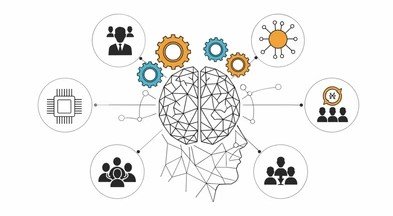
Integrated Intelligence represents a fundamental shift away from treating artificial intelligence as a collection of disconnected point solutions toward a unified, holistic ecosystem where multiple AI disciplines work in concert. Traditional approaches often deploy separate models for predictive analytics, computer vision, natural language processing, and rule-based automation—each operating in its own silo with limited awareness of the others. Integrated Intelligence breaks down these barriers, creating a cognitive layer that weaves together diverse AI capabilities with existing business systems, data sources, and human workflows. The result is an intelligent system that can perceive, reason, decide, and act with contextual awareness far beyond what any single AI model could achieve alone.
How Integrated Intelligence Works
At its core, Integrated Intelligence relies on seamless data sharing, standardized APIs, and orchestration layers that allow different AI components to communicate and collaborate in real-time. For example, a fully integrated supply chain solution might use computer vision to monitor warehouse inventory levels, deep learning to forecast demand based on historical patterns, natural language processing to automatically process supplier communications, and rule-based systems to trigger reorder workflows—all coordinated through a central intelligence layer. Similarly, an integrated customer experience platform could combine sentiment analysis from support tickets, predictive scoring of customer churn risk, generative AI for drafting personalized responses, and voice recognition from call center interactions into a single, coherent system that adapts dynamically to each customer's needs.
Strategic Advantages and Outcomes
Organizations that embrace Integrated Intelligence gain significant competitive advantages over those relying on fragmented AI deployments. By enabling different models to share context and learn from one another, integrated systems deliver more accurate predictions, fewer errors from misaligned outputs, and faster adaptation to changing conditions. Decision-making becomes more explainable as the orchestration layer tracks how each AI component contributed to a final recommendation. Furthermore, integrated intelligence reduces technical debt by consolidating infrastructure, streamlines model governance through centralized monitoring, and accelerates time-to-value for new AI initiatives. The ultimate outcome is an enterprise that thinks, learns, and acts with unprecedented coherence—transforming AI from a collection of tools into a true organizational intelligence.