
Generative AI Integration Solutions
Bridging Potential and Production
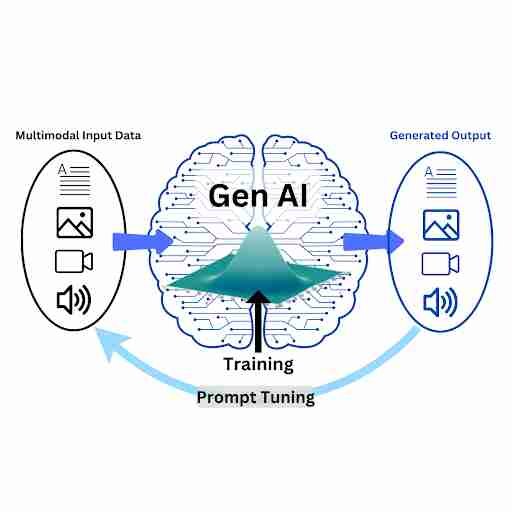
Generative AI Integration Solutions address the critical gap between the impressive capabilities of large language models (LLMs), image generators, and other creative AI systems—and the practical reality of deploying them within real-world business environments. While standalone generative models like GPT-4, Claude, or Stable Diffusion can produce remarkably human-like text, code, or images, they lack direct access to proprietary company data, cannot execute actions within business systems, and often generate plausible but incorrect information known as hallucinations. Integration solutions provide the architectural bridge that connects these powerful generative models to internal databases, customer relationship management (CRM) platforms, enterprise resource planning (ERP) systems, knowledge bases, and business logic rules—transforming a creative novelty into a reliable, auditable, and scalable business asset.
Key Integration Strategies and Technologies
Several proven strategies enable effective generative AI integration. Retrieval-Augmented Generation (RAG) grounds LLM responses in company-specific documents and databases, dramatically reducing hallucinations by forcing the model to cite verified sources before generating answers. Fine-tuning and parameter-efficient adaptation allow organizations to customize pre-trained models on internal data, aligning outputs with brand voice, industry terminology, and compliance requirements. Agentic architectures combine generative AI with deterministic business rules and API calls, enabling the system to not only answer questions but also take action—such as updating a ticket status, scheduling a meeting, or generating a report. Additional solutions include prompt engineering pipelines, guardrail layers that filter unsafe or non-compliant outputs, and orchestration frameworks that manage multiple models across different tasks. Together, these technologies create a controlled, enterprise-ready environment around generative AI capabilities.
Real-World Impact and Business Outcomes
When properly implemented, generative AI integration solutions deliver measurable transformation across virtually every business function. Customer support teams can deploy AI agents that understand complex product documentation, access order history, and draft personalized resolutions—reducing response times from hours to seconds while maintaining accuracy. Software development organizations integrate code generation directly into their development environments, accelerating feature delivery by automating boilerplate and suggesting optimized implementations. Marketing teams generate personalized content at scale while maintaining brand consistency through fine-tuned models. Legal and compliance departments process thousands of documents using RAG systems that extract specific clauses, summarize contracts, and flag risks with source citations. The result is not replacement of human workers but augmentation—empowering employees to focus on strategic judgment, creative direction, and relationship building while generative AI handles the heavy lifting of information synthesis, content creation, and routine communication.