


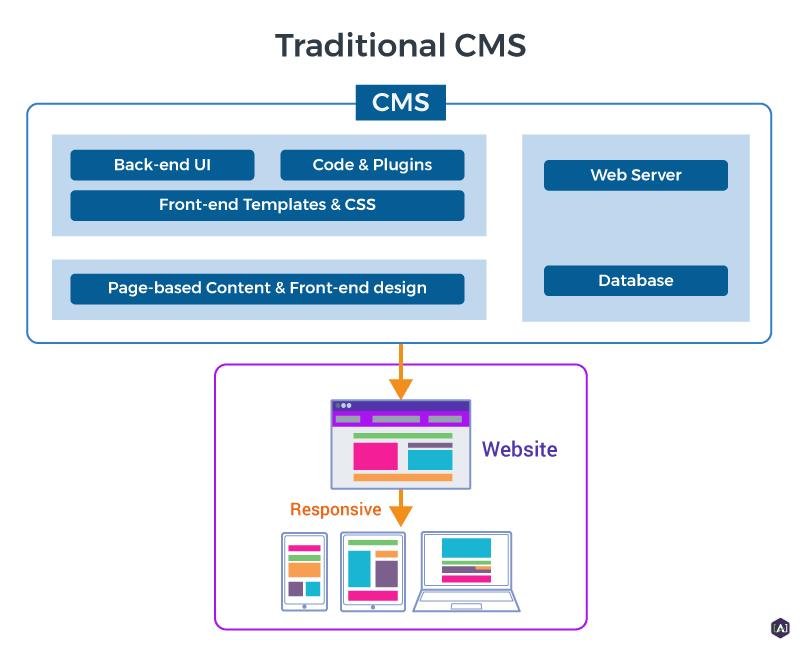

Content Management System
A Content Management System (CMS) is software that allows users to create, manage, and publish website content without deep technical knowledge. Popular CMS platforms like Drupal and WordPress help businesses build and maintain websites efficiently. For better visibility, CMS-based websites should follow SEO (Search Engine Optimization) practices so they rank higher on search engines like Google. Features such as clean URLs, mobile-friendly design, and fast loading speed play an important role in SEO.
A CMS has two main components: the Content Management Application (CMA), which allows users to create and edit content, and the Content Delivery Application (CDA), which publishes the content on the website. It also includes features like media management, user roles, themes, and plugins to customize the website easily. For strong keyword search performance, a CMS makes it easy to add and manage keywords in page titles, headings (H1, H2), meta descriptions, and content. Users can optimize images with alt text, create SEO-friendly URLs, and use internal linking to improve search engine indexing. Many CMS platforms also provide SEO plugins or modules that help analyze content and suggest improvements for better ranking.
Using a CMS saves time and effort, as content can be updated quickly without coding. It helps maintain consistency across the website and allows multiple users to work together efficiently. CMS platforms are widely used for blogs, business websites, and e-commerce sites, making website management simple and effective. An SEO-optimized CMS website improves user experience and increases website traffic. Regular updates, blog posts, and keyword-focused content help maintain higher rankings in search results. By using CMS tools effectively, businesses can manage content easily, improve visibility, and achieve long-term growth in digital marketing.